Expert witness fees in the UK depend on the scope of the instruction, the records to review, the specialist analysis required and whether the expert must attend meetings or a hearing. Ask for a written estimate that separates document review, analysis, report preparation and attendance, with the hourly rates, VAT, expenses and cancellation terms clearly stated.
This guide explains the main cost factors for a forensic accountant acting as an expert witness, includes an illustrative fee schedule and provides an instruction checklist. Distinguish the fee you agree with the expert from any amount recoverable from another party or available through legal aid; discuss the applicable rules and funding with your solicitor.
What information is needed for an expert witness fee estimate?
Prepare a short brief before asking for a quotation. It should cover:
- The financial question: what needs to be investigated, calculated or explained, and the period involved.
- The records available: a list of accounts, bank statements, contracts and relevant correspondence, with approximate volumes, file formats and known gaps.
- The work required: for example, a loss calculation, funds-tracing schedule or expert report, plus any expected meetings or hearing attendance.
- The timetable: relevant deadlines, the solicitor involved and any existing instructions or procedural requirements.
You do not need to send confidential records with your first enquiry. Start with a summary and arrange a suitable secure transfer if documents are needed. Book a free consultation with Lighthouse Consultants to discuss the financial issue and the scope of work.
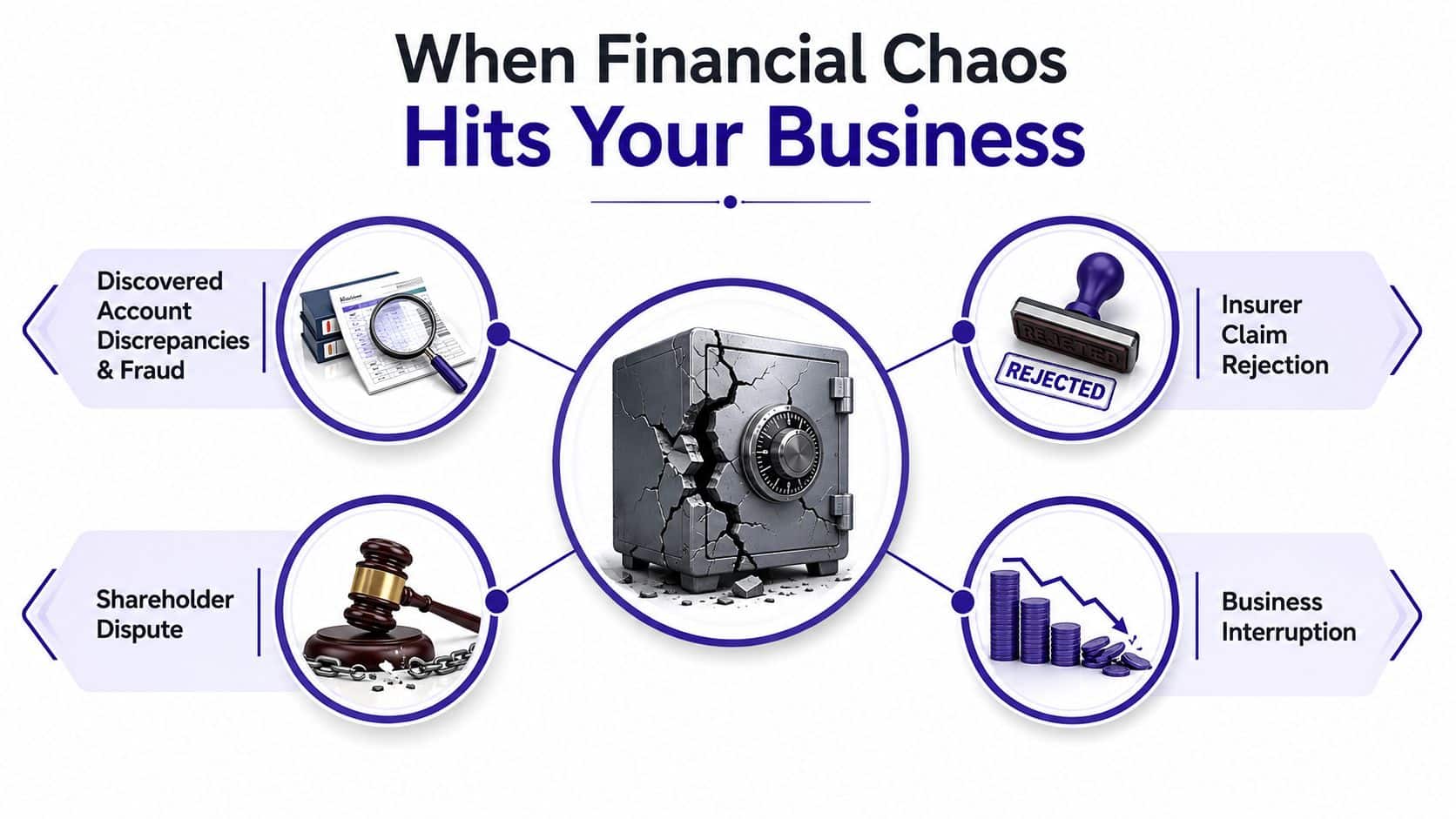
When expert financial evidence may be needed
A claim gets rejected. A shareholder starts asking for documents. A fraud turns up in the ledger. Suddenly, you're not just dealing with a financial mess, you're dealing with evidence, procedure, and the cost of proving what happened.
Expert evidence is not required in every dispute. For civil proceedings in England and Wales, CPR Part 35 restricts expert evidence to what is reasonably required and gives experts an overriding duty to help the court within their expertise. The court’s permission is needed to call an expert or put an expert report in evidence. Discuss the proposed instruction and procedural requirements with your solicitor.
For businesses, that creates a hard reality. You might need a forensic accountant to quantify loss, trace funds, or test the other side's figures, but the bill doesn't live in a vacuum. Recoverability is often tested on reasonableness and proportionality, not on how much the work cost you in the real world. The gap between those two numbers is where budgets blow up.
Practical rule: if the scope isn't tight at the start, the invoice won't be tight at the end.
That's why expert instruction should happen alongside crisis management, not after the case has already expanded. If you're dealing with fraud, disputed accounts, or a rejected insurance claim, you need the financial facts controlled early. A structured response to that sort of problem can be the difference between a defensible case and a costly spiral, which is why many teams also bring in specialist crisis support such as crisis management consulting.
Private fees and legal aid funding
A fee agreed with an expert is different from the amount recoverable from another party or payable through legal aid. Identify the jurisdiction, type of proceedings and funding arrangement before relying on a published rate.
Historical survey figures are not current quotations
The Academy of Experts fee page reports an average accountancy rate of £258 per hour in its 2013 survey results. That is historical survey data, not a current market average or a Lighthouse Consultants quotation. Obtain a written proposal for the actual work required.
Legal aid in England and Wales
The Legal Aid Agency’s current expert-witness guidance separates civil and family cases from criminal cases. Applicable rates and prior-authority requirements depend on the relevant rules and circumstances. These funding arrangements should not be presented as a general fee schedule for all private family or criminal work. Ask the instructing solicitor to check the applicable category and any approval needed before instruction.
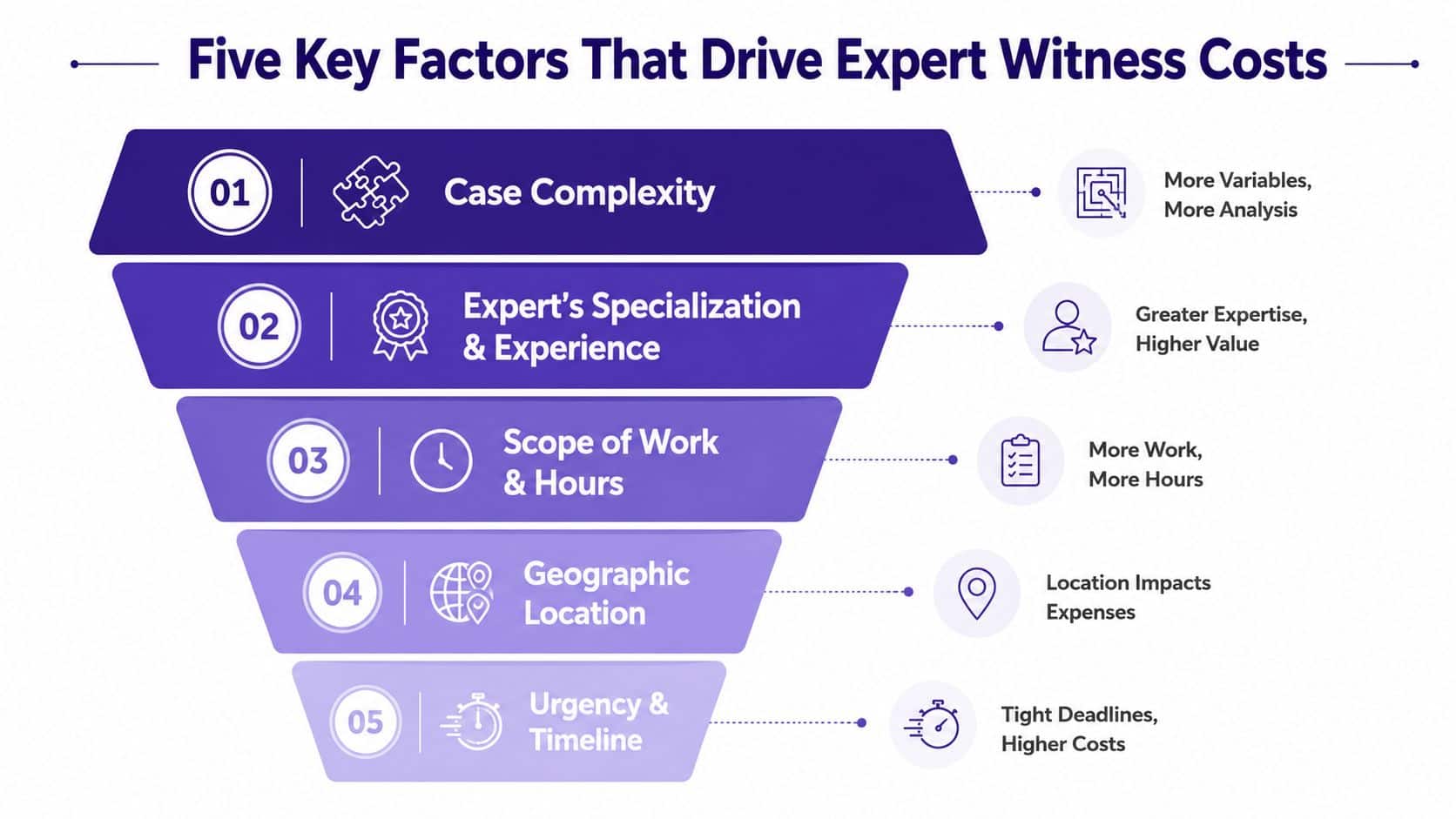
Five Key Factors That Drive Expert Witness Costs
Expert witness bills are rarely random. They swell for clear reasons, and once you know those reasons you can control them better. Most cost blowouts start with the brief, not with the expert's invoice.
Complexity drives the shape of the work
A narrow valuation is one thing. A fraud case involving multiple ledgers, offshore entities, missing source documents, and competing narratives is another. The more reconstruction the expert has to do, the more time gets burned on review, analysis, and explanation. That's not padding, it's labour, and it's where costs rise fastest.
Specialism and seniority affect the rate
A seasoned forensic accountant with court experience usually costs more than a general accountant, but that isn't just prestige pricing. You're paying for judgement, evidence handling, and the ability to withstand cross-examination. If the case needs that level of expertise, trying to buy the cheapest option often costs more later when the report falls apart.
Report preparation and revisions affect the total
A short report can stay contained. A long report with schedules, exhibits, and multiple assumptions can devour time. The drafting stage often costs more than clients expect, especially once solicitors ask for clarifications, revisions, and updates needed to address the relevant issues while preserving the expert’s independent opinion.
Attendance and conferencing add up fast
Conferences with solicitors, joint statements, and hearing attendance all add time. A trial that looks brief on paper can still create a long tail of preparation. If the matter runs over days, the bill follows.
Geography and urgency still matter
Where the work is done, and how quickly it has to be turned around, will affect cost. A rushed instruction costs more than a planned one, and last-minute work is where discipline usually disappears.
The point is simple. If you want control, you need to control scope, pace, and document quality before you ask the expert to start.
Understanding Billing Models and Payment Structures
Hourly billing is the default in UK civil litigation because it matches how expert labour works. You pay for research, analysis, report writing, conferences, and attendance, so the bill follows the time spent rather than a single notional outcome. That can be fair, but only if the scope stays tight.
Hourly, daily, fixed fee, and retainer models behave differently
Ask whether the proposal uses hourly rates, daily attendance fees, a fixed fee for a defined task or a retainer. Confirm any minimum attendance charge, cancellation terms and payment schedule. The proposal should identify expenses charged separately and state whether VAT applies, so you can compare the full anticipated cost.
The billing model shapes risk. A badly scoped hourly engagement can drift into a six-figure problem because every new document, call, and draft counts. A properly scoped fixed-fee instruction gives you more certainty, but only if both sides agree what's inside the box and what's outside it.
If the engagement letter doesn't separate core evidence work from advisory extras, the invoice will do that for you.
A good practical test is this. Ask whether you're paying for a defined deliverable or an open-ended process. If the answer is the second one, your cost exposure will stay unpredictable.
For a useful external benchmark on how practitioners think about these issues, see what a forensic audit costs. The headline lesson isn't the exact number, it's that scope and complexity drive cost faster than most clients expect.
When instructing an accountant in a dispute, it also helps to understand how wider fee mechanics affect delivery. Our own guidance on hiring a forensic accountant covers the practical questions that should be settled before work starts.
Budgeting, Negotiating, and Recovering Expert Fees
Budget separately for the amount you agree to pay and the amount you may recover. The applicable costs rules and any funding conditions need to be checked for the particular proceedings.
The recoverable figure can be very different from the invoice
Do not assume that an agreed private fee will be recovered in full. In civil proceedings in England and Wales, CPR 35.4 allows the court to limit the expert fees and expenses recoverable from another party. Your solicitor can advise on the applicable costs rules, budget and any funding restrictions for your case.
That's why negotiation should happen before the bill grows teeth. You can agree a cap. You can agree staged approvals. You can ask for a fee estimate tied to defined phases of work. You can also push for early costs management directions so the numbers don't drift unchecked.
What to lock down before work starts
- Scope and deliverables: get the expert to define exactly what question they're answering.
- Rate and cap: agree the hourly rate or a fixed fee, then state the ceiling clearly.
- Milestone reporting: require updates at review, draft, and final-report stages.
- Recoverability assumptions: test the rate against the likely court or opponent standard.
- Disbursements: decide what can be charged separately and what needs approval.
The blunt truth is that many disputes aren't lost on the merits, they're weakened by uncontrolled spend. If you can't explain why each block of expert time was necessary, a judge may not accept it as proportionate even if it helped your case.
How to Instruct a Forensic Accountant and Control Costs
The best way to control expert witness fees is to instruct the right person the right way. Vague instructions produce vague reports, and vague reports almost always cost more than they should. Clear instructions produce tighter evidence, cleaner drafting, and fewer arguments over the invoice later.
Start with a narrow brief
Tell the expert exactly what has to be answered, which period matters, and what format the final output needs to take. If you want a loss quantification, say so. If you want tracing through bank records, say so. If you need an opinion that can stand up in court, make that explicit from the start. Ambiguity invites rework, and rework is where cost starts to drift.
Agree the engagement in writing
Ask for a written scope, the proposed team, a fee estimate and reporting milestones. Confirm which tasks require additional approval and what happens if records arrive late or the hearing changes. If expert evidence is needed, discuss the proposed expert’s relevant experience and availability with your solicitor.
Lighthouse Consultants provides forensic accounting support for financial disputes, investigations and claims. A consultation can help identify the financial question and the work that needs to be scoped.
Illustrative Fee Schedule and Instruction Checklist
A staged estimate shows how hours and rates combine. Use the example below to understand the calculation, then request a proposal for your own matter.
An illustrative calculation, not a quotation
The following example uses an assumed £280 hourly rate to show how a staged estimate works. Neither that rate nor these hours represent Lighthouse Consultants’ prices, a typical engagement or a promised turnaround. Actual tasks, staffing and attendance terms must be agreed for the matter.
| Stage | Assumed hours | Illustrative cost |
|---|---|---|
| Initial conference and scope review | 4 | £1,120 |
| Document review | 12 | £3,360 |
| Financial analysis and modelling | 16 | £4,480 |
| Report drafting | 10 | £2,800 |
| Conference with instructing solicitors | 3 | £840 |
| Joint statement preparation | 4 | £1,120 |
| Trial attendance (two assumed eight-hour days) | 16 | £4,480 |
| Total | 65 | £18,200 |
The total is 65 hours × £280 = £18,200, before any applicable VAT and separately agreed expenses. Court preparation, additional questions, cancellation charges or further work may need separate provision. Ask what is included and how changes will be approved.
Checklist before you sign anything
- Qualifications checked: confirm the expert's credentials and courtroom experience.
- Scope agreed: make sure the written brief matches the actual issue in dispute.
- Fee estimate requested: ask for an estimate or fixed-fee quote before work begins.
- Billing model clarified: confirm hourly, daily, or fixed-fee treatment.
- Disbursements defined: spell out travel, transcription, and database costs.
- Milestones set: require progress updates at key points.
- VAT confirmed: know whether VAT will apply.
- Recoverability discussed: test the rate against likely court scrutiny.
Use that checklist before you sign the engagement letter. It's far cheaper to slow down at the start than to argue over a swollen bill after the case has already gone sideways.
Discuss the scope of your financial dispute
To discuss forensic accounting support, book a free consultation with Lighthouse Consultants. Describe the financial issue, the type of records available, any solicitor involved and relevant deadlines. Ask for the proposed scope, deliverables and fees before instructing work. Arrange a suitable secure transfer before sharing sensitive records.