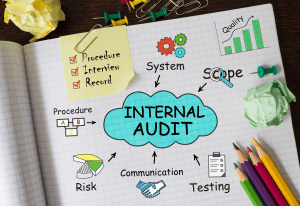
A finance director often discovers the problem during an insurance renewal, a lender query or a regulatory request. The risk file exists, but the controls were written for an earlier business, the owners have moved on and recent incidents sit in separate folders. A risk assessment review is a structured, evidence-based reassessment of whether an organisation's recorded risks, controls and assumptions still reflect current operations, threats and regulatory expectations. It should produce a dated, supportable record, not a refreshed spreadsheet with unchanged conclusions.
Table of Contents
- What a Risk Assessment Review Actually Is
- Why Reviews Differ from a First-Time Risk Assessment
- How a Review Is Conducted in Practice
- Regulator Expectations Across UK Frameworks
- Triggers That Should Force an Immediate Reassessment
- Common Findings and Typical Remediation Actions
- What an Independent Reviewer Actually Adds
- Practical Next Steps for UK Organisations
What a Risk Assessment Review Actually Is
Consider a hypothetical manufacturing business in the West Midlands. Its broker is asking detailed questions about cyber exposure, while the operations director has reported two forklift near misses during the last quarter. The existing risk assessment still describes the old warehouse layout, the former IT access process and controls owned by managers who no longer hold those roles.
That file isn't automatically useless. It is, however, a warning that the organisation needs to test whether its conclusions remain valid. An effective review examines the original assessment, identifies what has changed, checks whether controls operate as described and records why each risk rating remains appropriate or must be amended.
The risk assessment review process should normally answer five questions:
- What is in scope? The review should identify the entities, sites, processes, systems, risks and period covered.
- What has changed? Changes may involve people, products, suppliers, technology, incidents, regulation or the external threat environment.
- What evidence supports the rating? A control described in policy isn't the same as a control demonstrated through records, testing or observed practice.
- Who owns the response? Each action needs a named accountable person, a deadline and evidence of completion.
- What happens next? The final document should specify review dates and event triggers, rather than leaving the organisation with a static conclusion.
The Health and Safety Executive says employers must identify hazards, assess and control risks, and review those controls. Employers with five or more employees must record significant findings. Review timing should reflect changes in workplace conditions. The review therefore links governance to real activity. It isn't merely a compliance document, and it shouldn't be treated as a formality before an audit, claim or dispute.
Why Reviews Differ from a First-Time Risk Assessment
A first-time assessment builds the baseline. It identifies hazards or exposures, maps relevant activities, establishes likelihood and impact criteria, and assigns initial controls and owners. The exercise describes the organisation at a particular point in time.
An ongoing review starts with that baseline and interrogates it. The central question is no longer, “What could go wrong?” It is, “Does the existing assessment still provide a suitable and sufficient account of what could go wrong, given what has changed?”
That distinction affects the evidence. A reviewer should compare the recorded scope with current sites, workflows, staffing, systems and transaction patterns. The reviewer should also test whether mitigations have weakened through staff turnover, control exceptions, delayed actions or unverified assumptions.
| Dimension | First-Time Assessment | Ongoing Review |
|---|---|---|
| Starting point | No established risk position | Existing assessment, register and action plan |
| Main task | Identify and classify exposures | Challenge whether recorded conclusions remain valid |
| Evidence | Process descriptions, interviews and initial records | Updated records, incidents, testing, changes and prior actions |
| Ownership | Assign control owners | Confirm owners remain appropriate and accountable |
| Scoring | Establish the initial matrix and tolerances | Re-rate inherent and residual risk using current evidence |
| Output | Baseline register and control plan | Dated findings, rationale, sign-off and prioritised remediation |
A credible review should be traceable. Each material change needs a source, each revised score needs reasoning and each closed action needs supporting evidence. HSE guidance says reviews should respond to workplace change, new substances or equipment, staff changes, accidents and near misses, not just a calendar date. The organisation should be able to show an insurer, regulator, auditor or court what was known, what was tested and why management reached its conclusion.
How a Review Is Conducted in Practice
The process should be agreed before testing begins. A finance director or solicitor briefing an external reviewer should expect a written scope, an evidence request, documented testing and a report that distinguishes facts from management judgement.

Scoping and evidence collection
The scope should name the business units, locations, processes, systems, control areas and period under review. It should also state exclusions. That prevents a focused AML review from being mistaken for a full operational resilience assessment, or a warehouse safety review from being presented as an enterprise-wide conclusion.
The evidence request will vary, but commonly includes:
- Governance records: board or committee minutes, policies, previous registers and approval records.
- Operational records: incident logs, near-miss reports, training records, inspection results and control exceptions.
- Financial and compliance records: sample transactions, customer files, sanctions or screening records, management information and audit findings.
- Systems evidence: access lists, change records, backup checks, incident response tests and joiner-leaver documentation.
- Action records: remediation plans, overdue items, management responses and proof of closure.
Testing, scoring and reporting
Walkthroughs with control owners show how a process works in practice. Sample testing then checks whether the mitigating action operated consistently. The reviewer should challenge residual risk ratings, especially where management has described a control without showing that it was performed.
Many organisations use likelihood multiplied by impact, with inherent risk assessed before controls and residual risk assessed after controls. A 5 by 5 matrix can provide useful granularity, but the scale matters less than consistent definitions, documented tolerances and a clear explanation for each score.
Findings should be prioritised by exposure and control weakness. The final report commonly includes a risk matrix, gap analysis, management responses, a prioritised action plan and an evidence index. A practical framework for teams is available in this risk management process guide.
The video below provides a visual explanation of the review process.
Regulator Expectations Across UK Frameworks
A risk file can look orderly and still fail a regulator's test. The standard depends on the organisation's activities, regulator and exposure. A manufacturer must evidence workplace controls under HSE expectations. An FCA firm must connect assessment to its business model, customers and operational resilience. A solicitor must address client and public protection, while a supervised business must meet HMRC's financial-crime requirements.
HSE guidance on managing workplace risks focuses on practical controls. Employers with five or more employees must record their significant findings. Controls should be checked for effectiveness and reviewed when workplace changes, incidents or near misses reveal a problem. In a fast-changing environment, waiting for a fixed annual exercise may leave known exposure unaddressed.
For FCA firms, the assessment must be thorough, based on relevant information and proportionate to the business's nature, scale and complexity. Business-wide and individual assessments should remain current through regular review. Financial-resources guidance also expects the firm to define its risk appetite, understand material risks, assess control adequacy, use stress testing where relevant and apply the assessment in day-to-day decisions. A defensible file shows who made those judgements, what information supported them and how senior management challenged the result.
HMRC places particular weight on the audit trail for supervised businesses. Its guidance on checking risk assessment and management calls for a written business-wide assessment and relevant previous versions for the period under review. Reviewers compare that assessment with customer files, transactions and the way the business operates. They also check whether resources focus on the highest risks. Record the review date, supporting evidence and reasons for any changes, and check the retention and review requirements that apply to your sector.
| Regulator or framework | Core risk review expectation | Typical evidence examined |
|---|---|---|
| HSE | Current, suitable and sufficient assessment, with controls reviewed after change or incidents | Assessments, inspections, training, incident and near-miss records |
| FCA | Proportionate, thorough assessments connected to the business model and current risk profile | Risk appetite, management information, stress testing, control testing and board challenge |
| HMRC AML | Written business-wide assessment reflecting current risks, with relevant previous versions available | Customer and country risk analysis, rationale, review dates and prior versions |
| SRA | Current identification and mitigation of risks affecting clients and the public | Policies, training, cyber controls, financial-crime procedures and governance records |
| Charities and public bodies | Current registers, board or trustee challenge and proportionate assurance | Registers, minutes, action logs, assurance work and management responses |
The SRA's sectoral risk assessment identifies emerging risks that legal practices should consider. AI, sanctions circumvention, high street crime, passporting and company registration can all affect the assessment. The reviewer should test whether governance records address these exposures and whether responsibility is clear.
Triggers That Should Force an Immediate Reassessment
Set a review schedule that reflects the applicable rules and the pace of change in your organisation. A diary date should not delay action on a known problem. Workplace changes, new equipment, staffing changes, accidents and near misses can all trigger an earlier review. Record the reason for the chosen interval, assign an owner and bring the review forward when evidence shows that controls may no longer work.
Operational and structural triggers
A near miss should reopen the relevant assessment when it reveals that the existing control was misunderstood, bypassed or ineffective. The same applies to a reportable incident, cyber event, fraud referral, adverse audit finding or regulator contact. Waiting for the next scheduled date creates a record that may show the organisation knew of a changed exposure but didn't reassess it.
Structural changes are equally important:
- Mergers or acquisitions: New entities, sites, systems and inherited controls can alter the risk profile.
- Product or service launches: New customers, jurisdictions, data flows and delivery channels may invalidate earlier assumptions.
- Supplier changes: Concentration, outsourcing or a critical vendor failure can create dependency risk.
- Controlled-function appointments: A senior hire can change responsibilities, oversight and segregation of duties.
- System implementation: New finance, access, screening or operational systems need control validation.
- Sanctions or regulatory developments: External changes can affect customer acceptance, transaction monitoring and escalation thresholds.
Forensic reviewers also look for drift. Stale owners, action plans older than twelve months, untested controls and tolerance thresholds no longer aligned with current turnover or transaction volume all justify a documented scoping note and refreshed register entry.
Common Findings and Typical Remediation Actions
The difference between a weak review and a useful one is visible in the action plan. “Review policy” isn't remediation. A strong action identifies the control gap, names the owner, sets a date and points to the evidence that will prove closure.
Hypothetical worked example
A hypothetical regulated services firm receives an independent review of its customer-risk assessment.
- Poor review: The register carries forward old scores, names “Compliance” as the owner and records “monitor” as the action. No customer-file sample, screening evidence or management rationale supports the conclusion.
- Average review: The firm updates the register and assigns actions, but the scoring scale has no defined tolerance and completed actions aren't linked to evidence. Management has responded, but the reviewer can't confirm that controls operate consistently.
- Strong review: The firm documents its scope, tests a defined sample of customer files, recalculates inherent and residual scores, records the rationale for country and customer risk, names an accountable individual and attaches evidence references to each closed action.
Recurring weaknesses include:
- Stale registers: Reconcile the register to current products, sites, customers and systems, then obtain dated approval.
- Undefined scoring: Set out likelihood, impact, tolerance and escalation criteria before re-rating risks.
- Role-only ownership: Replace generic owners with named individuals and documented deputies where continuity matters.
- Unsupported controls: Test operation through records, observations or samples, rather than accepting policy language.
- Weak AML triggers: Document when enhanced due diligence, escalation or refusal is required, then test those decisions.
- Unverified cyber controls: Check privileged access, joiner-leaver evidence, remote-working safeguards and incident response exercises.
- Vague closure: Require a specific deliverable, due date and evidence reference before an action is marked complete.
For FCA firms, the review should also test whether risk information informs ordinary decisions. A register that never affects customer acceptance, pricing, approvals, staffing or investment isn't functioning as a management control.
What an Independent Reviewer Actually Adds
Internal ownership is necessary, but it can compromise challenge. A risk owner may benefit from a lower rating, a delayed action or a conclusion that avoids escalation. That doesn't imply bad faith. It reflects a structural conflict that an independent review can expose.
An external reviewer adds value by asking whether the evidence supports the rating, whether the control is designed properly and whether management information is complete. A forensic-accounting lens is particularly useful where financial-crime exposure, fraud controls, revenue pressure points, unexplained losses or disputed figures feed into the risk assessment.
Practical rule: A control isn't evidenced by the fact that someone says it exists. The reviewer should identify what record, sample, system output or observation demonstrates operation.
Independence also improves the quality of the audit trail. The reviewer should distinguish source evidence from management representations, preserve version history and record limitations. If access to a system, site or record wasn't available, the report should say so. A careful limitation is more defensible than an apparently complete conclusion built on assumptions.
Scope, confidentiality and cost
Before work starts, the parties should agree:
- Scope: Entities, sites, risk categories, period, testing depth and exclusions.
- Access: Records, systems, personnel, site visits and response times.
- Independence: Existing relationships, conflicts and reporting lines.
- Confidentiality: Handling of commercially sensitive, personal and legally sensitive material.
- Deliverables: Report, risk matrix, gap analysis, action plan and evidence schedule.
- Cost factors: Entity size, number of sites, regulatory exposure, data quality and depth of testing.
Lighthouse Consultants provides financial and operational risk assessments, recommends controls where significant risks are identified and evaluates likelihood and impact. Its risk assessment service may suit organisations that need an independent review with a forensic financial focus, but the appropriate scope still depends on the organisation's facts and the evidence available.
Practical Next Steps for UK Organisations
The first task is a gap check, not a new spreadsheet. Identify the framework that applies, then compare the current file against its actual expectations.
A short preparation checklist
- Identify the governing framework. Start with HSE for health and safety, FCA for regulated financial services, HMRC for AML, SRA for legal practices and Charity Commission guidance where applicable.
- Locate the last substantive review. Record its date, version, approver, scope and stated limitations.
- Test the evidence behind each material score. Ask whether the supporting record is current, complete and connected to the control described.
- List out-of-cycle triggers. Include incidents, near misses, business changes, cyber events, regulatory developments, audit findings and sanctions changes.
- Confirm operational ownership. A register needs named owners who can explain the controls and deliver remediation.
- Assess independence. If management owns the risk and benefits from the rating, external challenge may be needed for credibility.
- Prepare a scoping note. Include entity structure, regulators, sites, systems, recent incidents and known weaknesses.
- Choose the proportionate response. The right intervention may be a full review, a targeted gap analysis or a control-testing programme.
The final report should allow a director, trustee, solicitor, insurer or regulator to trace the conclusion from risk statement to evidence, score, control and action. A risk assessment report should also make clear what wasn't tested, which assumptions remain and when management must revisit the assessment.
Risk can change faster than paperwork. Review when conditions change, preserve the evidence trail and make decisions using current information. A short, well-supported update is more useful than a large register that no longer describes the business.
A proportionate first conversation can establish whether the existing file needs a full reassessment or a narrower evidence and controls review. Lighthouse Consultants can scope financial and operational risk assessment work for UK organisations and produce analysis designed for board, insurer, regulatory or dispute-related scrutiny.
Businesses, finance directors, solicitors and insurers can discuss an outdated risk file, a recent trigger or an evidence gap with Lighthouse Consultants. The firm can help define a proportionate scope, test the supporting records and produce an independent risk assessment review with clear findings and practical next actions.
For a free consultation, call +44 20 7871 0485 or email info@lighthc.london.