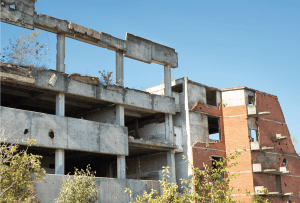
A fire has left a business owner with smoke in the offices, water through the stockroom and a premises that may be unsafe or commercially unusable. Insurance claims for fire damage can include more than the cost of rebuilding: they may also involve smoke contamination, damaged contents, mitigation, temporary premises, lost profit and other interruption losses. The immediate priority is safety and notification. The financial priority is to preserve evidence and separate physical damage from the trading loss, so the final schedule reflects what the policy covers and what the records can prove.
Table of Contents
- What to Do Immediately After a Business Fire
- Physical Damage and Business Interruption Claims
- Essential Evidence for Quantifying Your Loss
- Standard Accounting Versus Forensic Analysis
- Legal Timelines and Expert Witness Roles
- Hypothetical Example of a Fire Claim Analysis
What to Do Immediately After a Business Fire
The first hours are disorderly. Staff are asking whether they can return, customers are cancelling orders, suppliers want explanations and the insurer is asking for an initial account of what happened. A business should resist the temptation to clear the site or promise a reopening date before the position is understood.
Safety comes first. No one should enter a fire-damaged building until the relevant emergency services and competent specialists confirm that access is safe. Smoke, structural instability, contaminated water, damaged electrical systems and concealed heat damage can create risks after the flames are extinguished. Businesses arranging professional fire-safety advice may find KODOBI health and safety expertise useful when establishing safe working arrangements.
The first decisions
A disciplined response should follow this order:
- Protect people. Account for employees, visitors and contractors. Restrict access and record who is authorised to enter.
- Notify the insurer and broker. Follow the policy's notification requirements promptly. Give a factual initial description, not an untested conclusion about cause or value.
- Contact the fire and emergency authorities. Preserve incident references, reports and any available records concerning origin, cause and attendance.
- Prevent further damage. Emergency boarding, water extraction, temporary protection and security may be necessary, but permanent works should be agreed where practical before evidence disappears.
- Record the scene. Photograph and video buildings, machinery, stock, smoke deposits, water damage, access restrictions and apparently unaffected areas. Keep the original files and note when they were created.
- Open a cost file. Every emergency invoice, storage charge, temporary-premises cost and other expense should be logged with its purpose, date and payment evidence.
The business should also create a daily incident log. It should record closures, restricted access, staffing changes, cancelled or delayed orders, communications with the insurer, mitigation decisions and the date on which each area becomes usable. That log later helps connect the event to the financial effect.
Why the commercial impact starts immediately
The loss isn't limited to the damaged building. A retailer may lose sales because customers can't enter. A manufacturer may lose output because one production line is unavailable. A logistics business may incur extra handling, storage or transport costs. A hospitality business may face smoke odour and reduced visitor demand even after parts of the premises reopen.
Insurance claims for fire damage therefore need an early operational plan as well as an inspection. Management should identify which activity can continue, what must move elsewhere and which costs are genuinely incremental. A short-term decision that protects customers or preserves stock may reduce the eventual interruption loss, but the reason and cost should be documented.
Practical rule: preserve the scene, preserve the records and preserve the explanation for every mitigation decision.
The initial notification doesn't need to solve the valuation. It does need to be accurate, prompt and consistent with the evidence that follows.
Physical Damage and Business Interruption Claims
A fire can leave a business with a damaged building, unusable equipment and a trading interruption that continues after the flames are out. The claim therefore has two connected but distinct financial components. Physical damage covers the repair, reinstatement, cleaning or replacement of insured property. Business interruption measures the financial effect of disrupted trading, subject to the policy wording, limits, deductibles, exclusions and indemnity period.
These components require different evidence and calculations. A contractor's reinstatement estimate does not establish lost profit, while a sales forecast cannot prove the cost of repairing a roof, electrical installation or production asset.

Severity matters more than incident counts
UK evidence supports a focus on financial severity rather than frequency alone. The Association of British Insurers reported that domestic fire claims fell from 71,000 in 2006 to 26,000 in 2016, while the average domestic payment rose from £5,550 to nearly £15,000 in real terms. That represented an approximately 63% reduction in claim count and an increase of about 170% in average payment (ABI fire claims frequency and severity statistics).
Parliamentary evidence based on ABI material records £1.27 billion of property fire claim payments in 2016. Domestic claims represented £388 million, commercial and industrial claims £885 million, and commercial fire claims approximately £869 million. It also states that the average commercial fire claim increased threefold between 2007 and 2017, despite declining fire frequency (ABI 2016 property fire claims payment figures).
The practical message is straightforward. Fewer incidents do not make an individual claim financially simple. Smoke, firefighting water, demolition, compliance work, damaged systems, stock loss and a prolonged shutdown may all follow an event that initially appears limited.
Separate the physical-damage schedule into clear heads:
- Building and fixtures: repair, replacement, drying, decontamination and reinstatement.
- Plant and equipment: repairability, replacement specification, depreciation treatment and testing.
- Stock and work in progress: quantities, condition, ownership, valuation basis and salvage.
- Additional costs: temporary premises, storage, security, specialist cleaning and emergency works.
The business-interruption schedule should then compare the expected trading position with actual trading. It should address saved variable costs, extra expenditure and the recovery period. Guidance on business interruption insurance in the UK provides useful context, but the policy wording determines what is recoverable.
Structured property insurance claim investigations may help where cause, scope or property condition is disputed. Independent analysis does not replace the insurer's investigation. It gives the policyholder, adviser or claims team a documented basis for testing conclusions and separating physical loss from consequential financial loss.
The following video offers general visual context on the aftermath of a fire. It is not a substitute for the policy, a site inspection or financial analysis.
Essential Evidence for Quantifying Your Loss
A defensible claim schedule is an indexed chain of evidence. Each line should answer four questions: what was lost, when did it arise, how was it valued and where is the source record? Unsupported round sums create avoidable disputes, particularly where stock, replacement costs or lost revenue are material.
Build the property file
The physical-loss file should contain:
- Policy documents: the policy, schedules, endorsements, deductibles, limits and relevant definitions.
- Incident evidence: fire-service records, incident references, photographs, video, access logs and internal reports.
- Asset support: fixed-asset registers, purchase invoices, serial numbers, depreciation records, maintenance records and disposal evidence.
- Stock records: inventory counts, purchase records, sales records, production records, goods-in-transit details and ownership information.
- Repair evidence: surveys, scopes of work, quotations, invoices, completion certificates and explanations for changes in scope.
- Mitigation costs: receipts for security, drying, storage, temporary accommodation or premises, cleaning and other emergency measures.
The claimant shouldn't discard damaged items merely because they appear worthless. Where disposal is necessary for safety or hygiene, photographs, inventories, professional observations and written approval should create a substitute record.
Prove the trading loss
Business-interruption evidence should show both the likely performance without the fire and the performance that resulted. Useful records include:
- monthly management accounts and statutory accounts;
- VAT returns, sales ledgers and purchase records;
- payroll data and staffing schedules;
- budgets, forecasts and board papers prepared before the incident;
- product, site or channel-level sales data;
- customer cancellations, order books and delivery records;
- post-loss sales, capacity constraints and mitigation costs.
The objective isn't to submit every document without explanation. It is to organise the documents so an independent reviewer can trace a number in the claim schedule back to the underlying accounting entry.
Eagle Restoration's guidance on avoiding claim pitfalls reinforces a general principle that applies to serious losses: early documentation protects the evidence needed to assess damage before cleaning, disposal or repair changes the scene.
Keep assumptions visible
A claim schedule should label assumptions rather than hide them. If a forecast uses pre-loss growth, seasonal patterns, customer orders or production capacity, each assumption should be identified and tested against contemporaneous evidence. The analysis should also distinguish revenue from profit and remove variable costs that the business would have avoided.
The evidence-gathering process should be proportionate to the claim. A small, straightforward loss may need a concise indexed file. A complex commercial claim may require a document register, data-room structure, reconciliation to accounts and a schedule that separates agreed figures from disputed assumptions.
Standard Accounting Versus Forensic Analysis
Routine accounting records what happened. A fire claim often asks a different question: what would probably have happened if the fire had not occurred? That counterfactual cannot be copied from a single profit and loss statement.
A normal monthly account may show that turnover fell after the incident. It won't, by itself, show whether the fall resulted from the fire, seasonal demand, a lost customer, a pricing decision, a supply problem or a pre-existing decline. It also won't automatically identify the variable costs saved during the closure or the extra costs that reduced the interruption loss.
Comparison of accounting approaches for fire claims
| Aspect | Routine accounting | Forensic analysis |
|---|---|---|
| Primary purpose | Record transactions and report historic performance | Quantify the loss caused by the insured event |
| Time perspective | Actual past results | Pre-loss baseline, counterfactual performance and actual recovery |
| Revenue analysis | Total sales by accounting period | Sales by site, product, customer, channel or capacity where relevant |
| Costs | Classification for financial reporting | Separation of fixed, semi-variable and avoided variable costs |
| Evidence | Ledgers, invoices and reconciliations | Ledgers plus operational records, forecasts, orders, payroll and external corroboration |
| Assumptions | Often embedded in budgets or management reporting | Explicitly documented, tested and sensitivity-checked |
| Independence | Prepared for internal reporting | Objective analysis prepared for negotiation, review or litigation |
| Output | Accounts and management reports | An auditable claim schedule, workings and explanatory report |
The forensic approach starts with a but-for-fire baseline. That baseline may use pre-loss trading, seasonality, known orders, production capacity, customer behaviour and management information. It must also consider adverse factors that would have affected the business even without the fire. Extending the strongest pre-loss month across the indemnity period is rarely defensible.
The calculation needs policy discipline
Business-interruption cover may respond to reduced revenue caused by an insured peril, but the policy wording determines the insured basis. The ABI explains that cover can involve a pre-tax shortfall in profits and additional operating costs, with attention to variable costs, increased costs of working, trends, savings, deductibles and the maximum indemnity period (ABI business interruption guidance).
A forensic accountant therefore tests whether a cost increased because of the fire and whether that expenditure reduced the interruption loss. For example, temporary production elsewhere may be an additional cost, but its treatment depends on the policy and on whether it preserved sales that would otherwise have been lost. The analysis should avoid counting the same cost within both property damage and business interruption.
Independence matters when the schedule is likely to be challenged. An adviser should state the information relied upon, distinguish fact from assumption and identify limitations. That approach may produce a lower figure than an optimistic internal forecast, but it is more likely to withstand questions from an insurer, solicitor, mediator or court.
Legal Timelines and Expert Witness Roles
Section 13A of the Insurance Act 2015 implies a term into an insurance contract requiring the insurer to pay sums due within a reasonable time. The legislation states that a reasonable time includes a reasonable period to investigate and assess the claim, while recognising that circumstances may justify a longer period (Insurance Act 2015, section 13A).
That isn't a fixed settlement deadline for every fire. Complex questions about cause, coverage, reinstatement scope, stock ownership or interruption can require investigation. The practical distinction is between legitimate investigation and avoidable delay. A policyholder should notify the loss promptly, cooperate with reasonable enquiries and provide a structured claim schedule as information becomes available.
The placement issue can return after the fire
The Insurance Act 2015 also requires a business to make a fair presentation of the risk before entering into the contract. Section 3 concerns material circumstances the insured knows or ought to know, or information sufficient to put a prudent insurer on notice that further enquiries are needed (Insurance Act 2015, section 3). A coverage dispute may therefore involve proposal forms, renewal questionnaires, declared values, occupancy, fire protection and material changes, not only the post-fire invoices.
A forensic review should distinguish an accounting error from a material misrepresentation and examine the policy's terms and statutory remedies. It shouldn't assume that an inaccurate declared value automatically decides the claim.
When an expert witness is appropriate
A forensic accountant may support a claim during adjustment, negotiation, mediation or litigation. The role changes with the forum. In an advisory report, the accountant may help management assemble evidence and test the insurer's calculation. An expert report prepared for proceedings must follow the applicable procedural requirements and assist the court rather than act as advocacy.
The expert should be able to explain:
- the baseline trading method;
- the link between the insured event and the interruption;
- the treatment of saved variable costs;
- the effect of mitigation and increased costs of working;
- the reconciliation to accounts and source data;
- the policy assumptions supplied by legal advisers;
- the limitations and areas of uncertainty.
Claim integrity is equally important. The Insurance Act 2015 addresses fraudulent claims and related remedies (Insurance Act 2015 explanatory notes). Every item should have an audit trail. Unresolved anomalies should be explained before submission, not concealed inside a large schedule.
Hypothetical Example of a Fire Claim Analysis
The following is a hypothetical example, not a client result and not a calculation of what any policy must pay.
A retail business suffers a fire in its shop and stockroom. Smoke affects the sales area, firefighting water damages stock and the premises cannot trade normally during the initial repair period. Management submits a schedule showing the pre-loss sales forecast as the claimed loss. That is a starting point, not the answer.
The forensic accountant first establishes the counterfactual. Pre-loss monthly accounts, product-level sales, existing orders, seasonal information and the management budget indicate what turnover the shop would probably have generated during the affected period. The analysis then removes sales that would not have been possible because of a separate supplier shortage documented before the fire.
A transparent calculation
The working schedule might be structured as follows:
| Calculation stage | Evidence used | Treatment |
|---|---|---|
| But-for-fire turnover | Pre-loss sales, orders and budget | Estimate likely sales without the fire |
| Less avoided variable costs | Purchase records and gross-margin analysis | Remove costs not incurred because sales were lost |
| But-for-fire gross profit | Revenue and variable-cost analysis | Establish the insured profit basis, subject to wording |
| Less actual gross profit | Post-loss sales and costs | Reflect trading that continued during recovery |
| Add eligible increased costs | Temporary premises and extra distribution records | Include only costs supported by the policy and evidence |
| Less savings | Payroll, utilities and other cost records | Remove costs not incurred during interruption |
| Resulting interruption loss | Reconciled workings | Present with assumptions, limits and deductible |
Suppose the business's forecast assumes that every pre-loss customer would have continued buying at the same level. The reviewer would test that assumption against order cancellations, footfall information, customer communications and trading conditions. A fire doesn't automatically explain every post-loss fall in revenue.
The same discipline applies to the property schedule. Stock quantities should be reconciled to inventory records, damaged items should be photographed before disposal where possible, and replacement quotations should identify specification and scope. A contractor's estimate should be checked for betterment, duplication, compliance work and items that belong under another section of the policy.
What makes the schedule credible
The final file should allow a third party to move from the claim total to each supporting record. It should separate agreed facts from estimates, show the effect of saved costs and explain why mitigation expenditure was necessary. If the business continued trading from another location, the analysis should capture both the revenue preserved and the extra cost incurred.
The resulting figure may be more conservative than management's initial expectation. That isn't a weakness. A transparent calculation with clear limitations gives the business and its advisers a stronger basis for resolving disagreements than an inflated total with unexplained assumptions.
Lighthouse Consultants provides forensic accounting and financial analysis for insurance claims, including the quantification of property damage, asset losses, replacement costs, lost revenue and additional expenses. Business owners, finance directors, solicitors and insurers can discuss the evidence, scope and independence requirements for a fire claim through Lighthouse Consultants and arrange a proportionate next step.